Emerging material handling mining technologies are shifting from isolated automation to integrated site systems. Buyers must plan for sensor-heavy conveyors, electric haul fleets, and digital twin integration. Preparing now means designing infrastructure that can support these future mining tech upgrades without major rework.
- Material handling mining systems are moving from manual monitoring to continuous, sensor-driven operation.
- Long-term value comes from designing infrastructure that can support future automation upgrades.
- Electric haul fleets and automated conveyors will change energy, maintenance, and labor planning.
- Digital twins and remote operations will reduce site downtime and improve asset reliability.
- Buyers should prioritize connectivity, data access, and modular design when selecting new assets.
Why site logistics are changing faster than equipment specs
The biggest risk in material handling mining is not buying the wrong machine. It is buying equipment that locks you into an outdated logistics model. The next decade of site operations will reward those who treat conveyors, haul trucks, and stock piles as connected systems rather than standalone assets.
Modern mines already use automated conveyors, remote control systems, and real-time condition monitoring. The next step is integration. Sensors on a belt, data from a haul truck, and stacker-reclaimer operations will all feed into a shared digital model. This changes how you plan capacity, maintenance, and labor.
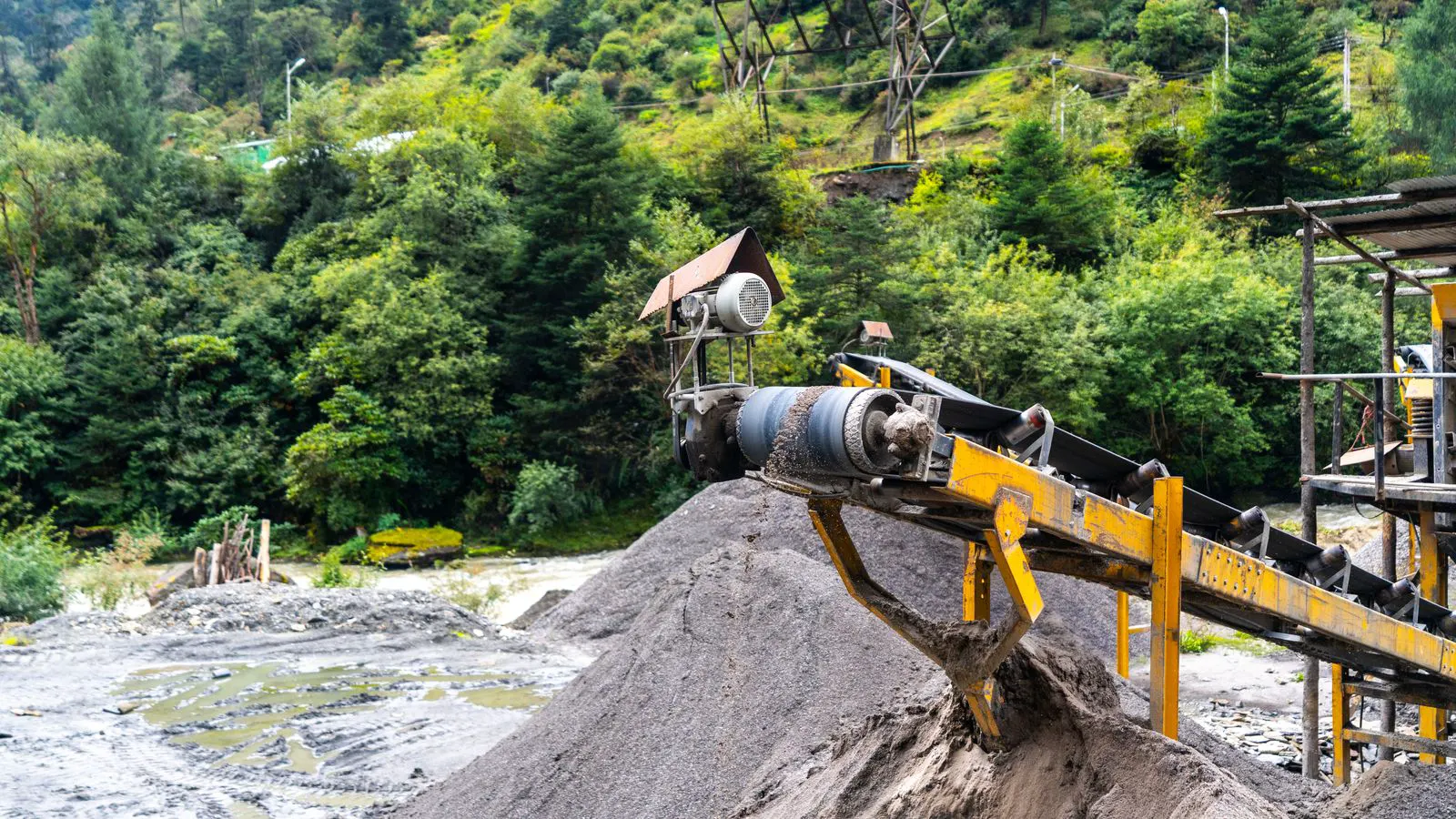
Consider a mid-sized surface operation that installed a standard belt conveyor in 2020. The design was based on a fixed cycle: the truck arrives, dumps, and leaves. The belt runs at a constant speed. The maintenance team checks the rollers every two weeks. Today, that same site might install vibration sensors on the head pulley and temperature sensors on the motor. If the data shows a rolling element is starting to overheat, the control system can slow the belt slightly or flag the issue for inspection. The machine is the same, but the decision process has changed.
Buyers should view this as a shift in planning, not just technology. The question is not whether automation is happening. It is whether your site design can absorb it. A site that built its conveyor stations for manual inspection access may not have space for the sensor cabinets, power drops, or network switches needed for remote monitoring. A haul road that was graded for a specific tire pressure and load may not support the higher ground pressure of a larger electric unit or the cable drag of a charging system.
What automated conveyors will look like in five to ten years
Automated conveyors are already common in many operations. The future change is less about the belt itself and more about the intelligence around it. Expect tighter control of belt tension, tracking, and speed based on live data from multiple sensors.
A key development is condition-based maintenance. Instead of fixed intervals, conveyor systems will adjust service based on actual wear, temperature, and load patterns. This reduces unnecessary downtime and extends component life.
For example, a conveyor carrying abrasive ore at 650 meters per hour experiences different wear on the idlers than one carrying clean, rounded aggregate at the same speed. A fixed maintenance schedule treats both lines identically. A condition-based system adjusts. If the vibration signature on the return idlers changes, the system knows the belt is tracking poorly. If the motor current spikes, it knows the belt is overloaded or slipping. The maintenance team can then target the specific problem rather than replacing idlers that are still in good shape.
For buyers, this means conveyor packages should include open data access. If the control system cannot export wear data or integration signals, the asset will be harder to upgrade later. Look for vendors that support standard communication protocols and allow third-party monitoring tools to connect.
Ask specific questions during the vendor review. Can the PLC export real-time belt speed and current draw? Can the HMI display the status of each drive unit? If the answer is no, or if the data is only available through a proprietary dashboard, you are buying a black box. That limits your ability to integrate the conveyor into a site-wide digital model.
Another shift is modular design. Conveyors will be built with interchangeable sections so one segment can be replaced or upgraded without stopping the full line. This is especially useful in high-abuse environments where dust, heat, or impact loads vary by zone.
In practice, this means the conveyor structure is designed with expansion joints and standardized connection points. If the first 100 meters of the line are in a dusty area that requires higher dust seals, and the next 500 meters are in a cooler, cleaner area, you can build different sections for each zone. If the dusty section wears out faster, you replace only that section. You do not stop the entire line for maintenance. This requires careful engineering during the design phase. The electrical drops, the structural supports, and the alignment tolerances must be planned to allow for modular replacement.
How electric haul fleets will change logistics planning
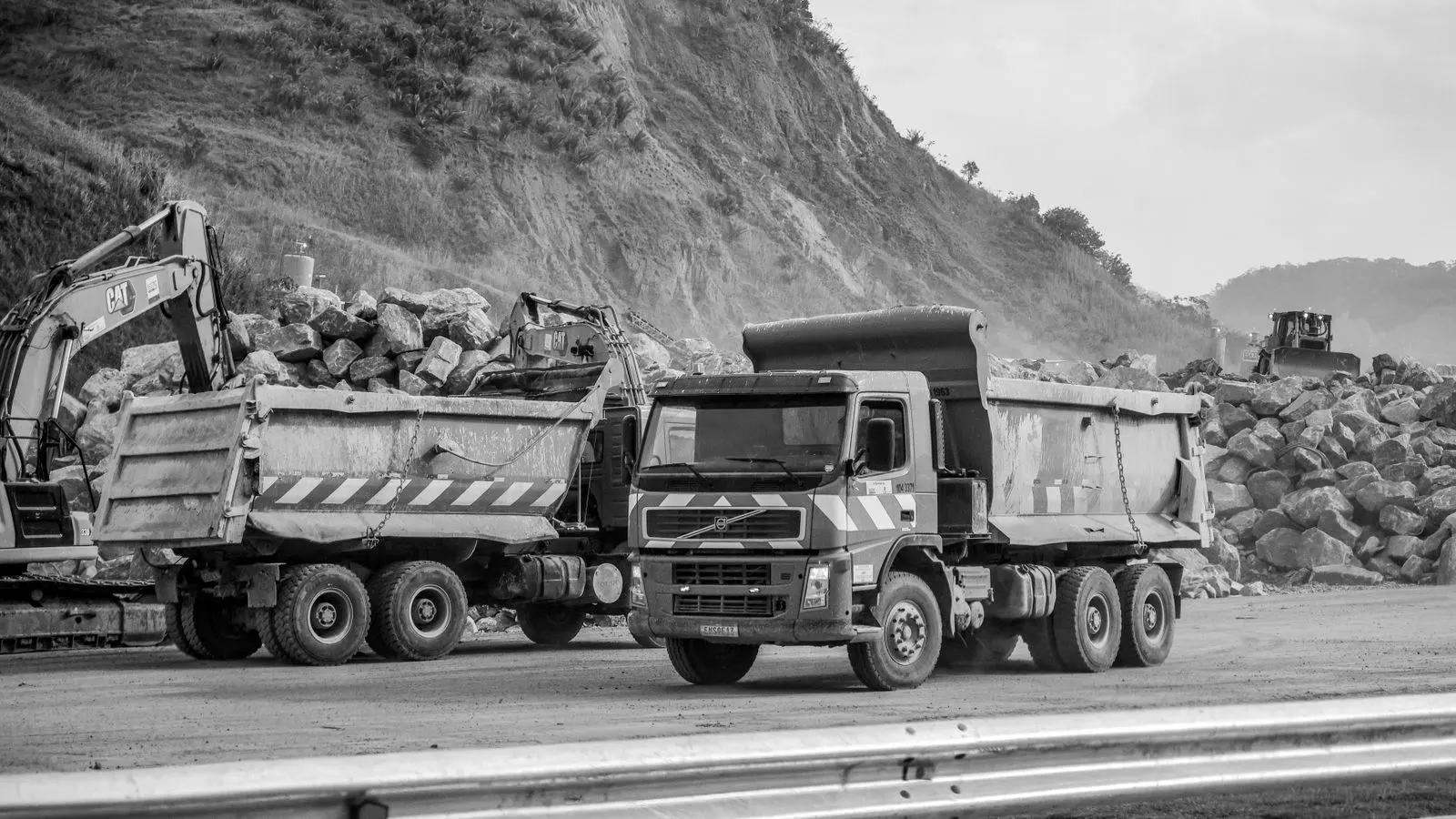
Haul truck selection is moving beyond payload and engine output. Electric haul fleets are gaining traction in surface and underground operations where power access is manageable. The trade-off is clear. Electric trucks reduce fuel handling and can lower operating costs per ton.
However, they change the site plan. You need charging stations, power infrastructure, and a new maintenance routine. Battery thermal management, cable handling, and charging bay layout all require space. If your haul road design was built only for diesel trucks, retrofitting may be difficult.
Consider a pit that currently uses diesel haul trucks with a 15-minute changeover cycle. The trucks go to the transfer point, unload, and then return to the battery or fuel station. The transfer point is designed for the truck’s turning radius and the time it takes to unload. Now imagine switching to electric trucks that need to plug in for 30 minutes. The transfer point must now accommodate a charging cable and a power source. The ground must be reinforced to support the weight of the charging unit. The layout must allow for the truck to park safely and connect without blocking other vehicles.
Buyers should plan charging infrastructure early. Even if the fleet is diesel today, leaving space for future electric units can avoid major civil works later. The same applies to conveyor endpoints. Stockpile geometry and transfer points may need adjustment to support different loading or unloading methods.
A practical step is to map the energy profile of your site. Identify where power is available, where it would be costly to extend, and which haul legs are best suited for battery or hybrid units. This gives you a realistic path, not a vague goal.
For instance, a pit that is 5 kilometers from the main power substation may not be a good candidate for full electric haulage. The cost of extending the power line may outweigh the savings. But a pit that is 1 kilometer from the substation, with a short haul leg and a high turnover rate, may see a strong return on investment. The power profile must be mapped before the truck selection is made.
What remote operations mean for conveyor and haul systems
Remote operation is already moving from pilot projects to routine use. In the next phase, remote control will extend beyond single machines to coordinated site logistics. A control room operator will manage a conveyor line, a haul fleet, and a stockpile in a shared view.
This changes staffing. Operators will spend more time on oversight, exception handling, and data review. The physical plant will still need local personnel for mechanical work, but the number of people needed for continuous monitoring will fall.
For long-term buyers, this means the value of a site is increasingly tied to its control room capability. The hardware is only part of the system. If your control room is not designed for multiple data streams and remote interfaces, it will become a bottleneck.
Plan for better connectivity. Fiber or high-bandwidth wireless links between plant, conveyor stations, and haul routes are becoming standard. If your site currently relies on low-power radio links, budget for an upgrade path now.
A control room that handles data from ten trucks and one conveyor can be a small room with two monitors. A control room that handles data from fifty trucks, three conveyor lines, and a stockpile system needs a larger space, better ergonomics, and more powerful computing resources. The layout of the room matters. The operators need to see the site map, the truck positions, the belt status, and the alarm history in one view. If the data is scattered across different screens or requires clicking through multiple menus, the operator will miss critical issues.
The connectivity must be reliable. A dropped data link for 30 seconds can cause a conveyor to stop if the safety system is designed to do so. It can also confuse the remote operator. The network design must account for redundancy and failover. If the primary fiber link fails, the system must switch to a backup link without interrupting the operational view. This is a design decision that must be made early.
How digital twins will affect equipment selection
A digital twin is a live model of your site or equipment that updates with real data. In material handling mining, this means the twin can show belt load, truck speed, stockpile shape, and maintenance status in one place.
The practical benefit is decision speed. When a belt develops a tracking issue or a haul truck shows abnormal fuel or battery behavior, the twin can link the event to historical patterns. Maintenance teams can respond before failure spreads.
For buyers, the key is data quality at the source. A twin is only as good as the sensors feeding it. When evaluating new conveyors or haul assets, ask what data points are captured and how often. You want raw, usable data, not only dashboard summaries.
A common mistake is treating the twin as a separate project. It should be built into the asset selection from the start. If the equipment vendor does not provide a data export path, the twin will require custom integration work later.
Consider a conveyor that has a temperature sensor on the motor. The sensor sends data to the local PLC. The PLC sends the data to the HMI. The HMI displays the temperature on a screen. This is a closed loop. The data is visible, but it is not accessible to the site-wide model. Now consider a conveyor that has the same sensor, but the PLC is connected to a network. The data is sent to a central server. The server stores the data and sends it to the digital twin. The twin can now compare the motor temperature to the belt load, the ambient temperature, and the historical maintenance records. If the motor temperature is rising while the belt load is low, the twin can flag a potential bearing issue. This is a higher level of insight, but it requires the data to be open and accessible.
When evaluating vendors, ask for the data dictionary. What data points are captured? What is the frequency? Is the data sent in real time or in batches? What format is used? These details determine whether the data can be integrated into a site-wide model. If the data is locked in a proprietary format or sent only in daily summaries, the twin will be less useful.
A practical table of emerging logistics shifts
| Shift | What changes | What to plan for |
|---|---|---|
| Sensor-driven conveyors | Continuous monitoring of belt, rollers, and drive components | Open data access and modular conveyor design |
| Electric haul fleets | Charging infrastructure and new maintenance routines | Site power planning and spare parts strategy |
| Remote operations | Shared control for multiple assets | High-bandwidth connectivity and control room upgrades |
| Digital twins | Live model of site performance | Data export standards and sensor placement |
| Predictive maintenance | Service based on condition, not time | Spare parts inventory and technician training |
This table is not a roadmap for every site. It is a checklist for the decisions that matter most. Each shift has a cost, but most of those costs are avoidable if you address them during design.
For example, the cost of adding sensors to an existing conveyor is moderate. The cost of retrofitting a conveyor to allow for sensor installation later is high. The cost of adding charging infrastructure to a new site is manageable. The cost of retrofitting an existing site to add charging infrastructure is high. The design phase is where you can minimize these costs.
How to prepare your site for the next logistics cycle
Start with a logistics audit. Map every conveyor, haul route, transfer point, and stockpile. Note where you currently use manual inspection, where data is captured, and where decisions are made by instinct.
Next, identify the weakest link. Is it power access? Is it control room capacity? Is it the age of the conveyor structure? The weakest link usually determines how quickly you can adopt new technology.
Then set a phased plan. A realistic approach is to upgrade one system first, measure the results, and expand. For example, add sensors to one high-volume conveyor line and test the data flow. Once that works, extend the same model to a haul fleet or a stockpile area.
Finally, build the team capability. Technology does not replace people. It changes their role. Train maintenance staff to read sensor data. Train planners to use the digital twin for capacity checks. The asset is only as useful as the people who operate it.
The audit should be detailed. For each conveyor, note the length, the belt width, the speed, the motor size, and the current maintenance schedule. For each haul route, note the distance, the gradient, the ground condition, and the current truck type. For each transfer point, note the design capacity, the current throughput, and the maintenance access. This data will reveal where the site is constrained and where it has room to grow.
The phased plan should be specific. Instead of saying “upgrade the conveyor,” say “install vibration sensors on the head and tail pulleys of Conveyor A and connect them to the central server.” Instead of saying “improve connectivity,” say “install fiber optic cables from the control room to the three main conveyor stations and the transfer point.” These specific steps are easier to budget, schedule, and manage.
The team capability must be addressed early. If you install sensors but the maintenance staff do not know how to interpret the data, the sensors are useless. If you install a digital twin but the planners do not know how to use it for capacity checks, the twin is useless. Training must be part of the project plan, not an afterthought.
Final point for long-term buyers
The goal is not to adopt every new technology at once. The goal is to keep options open. Every major purchase should be evaluated against its future upgrade path. If a conveyor, truck, or control system can support more sensors, more data, and more automation later, it will protect your investment.
Material handling mining is becoming a connected system. The sites that plan for this will have smoother operations, lower downtime, and a clearer path to efficiency. The sites that do not will face higher retrofit costs and slower adoption. The difference is usually made in the design phase, not after the first failure.
When you evaluate a vendor, do not just look at the price and the warranty. Look at the integration capability. Can the equipment be connected to your existing systems? Can it be upgraded later? Can the data be exported? These questions determine whether the equipment will be a useful part of your site or an isolated asset.
The design phase is the most valuable time to make these decisions. It is also the most expensive time to make them. But the cost of getting it wrong later is much higher. A conveyor that cannot be upgraded will require a full replacement. A site that cannot support electric trucks will require major civil works. A control room that cannot handle multiple data streams will require a rebuild. These costs are avoidable with careful planning.
The key is to treat the site as a system, not a collection of machines. Each machine is part of a larger logistics model. The decisions made during the design phase will determine how well that model works for the next decade.
Frequently asked questions
What is the single most important upgrade for material handling mining systems?
Open data access is the most important upgrade. It allows sensors, control systems, and monitoring tools to work together without being locked into one vendor.
How can a buyer know if a conveyor is suitable for future automation?
Look for modular design, standard communication protocols, and built-in sensor mounting points. These features make it easier to add tracking, condition monitoring, and remote control later.
Is electric haul truck adoption realistic for most mine sites?
It is realistic where power access is manageable and haul legs are short to medium. Long haul legs or remote sites may need more time for battery or infrastructure development.
What is the biggest mistake in planning for remote operations?
Underestimating connectivity and control room capacity. Remote operation requires reliable data links and a room designed for multiple data streams and operator oversight.
Should buyers invest in a digital twin before upgrading equipment?
Not necessarily. Start by ensuring new equipment provides raw data export. The twin is more useful when the underlying data is clean and accessible from the start.