Proper haul truck selection depends on payload capacity, terrain profile, loading system compatibility, and total operating costs. This guide outlines the specific technical and operational criteria needed to match heavy-duty trucks to high-volume mining material handling requirements.
- Match truck payload to the average daily tonnage target and pit depth.
- Verify loading system compatibility before finalizing the truck model.
- Calculate fuel efficiency and maintenance costs across the expected operating life.
- Prioritize terrain rating and suspension design for the specific haul road profile.
- Review operator availability and spare parts logistics for the chosen fleet.
Matching Payload to Daily Production Targets
The first decision in haul truck selection is determining the appropriate gross vehicle weight. The truck payload must align with the mine’s planned annual throughput and the distance to the processing plant. If the haul distance is short, a larger truck reduces the number of trips required. If the distance is long, a smaller truck may lower fuel consumption per ton and reduce wear on the drivetrain.
Engineers typically calculate the required payload by dividing the daily tonnage goal by the expected number of productive trips per shift. This calculation includes cycle time, which covers loading, dumping, and travel. A truck that is too small forces the fleet to run more cycles, increasing tire wear and engine hours. A truck that is too large may struggle to load from standard shovels or may exceed the structural limits of the haul roads.
The payload class also dictates the type of tires required. Larger payloads demand tires with higher load ratings, which affects fuel burn and rolling resistance. The selected truck must accommodate the planned material type, such as overburden, ore, or tailings, without exceeding the axle load limits set by the manufacturer.
Consider a typical open pit operation with a haul distance of 1.5 kilometers. A 150-tonne truck might complete 25 cycles in an 8-hour shift, assuming a 12-minute cycle time. If the target is 3,000 tonnes per shift, the math works out. However, if the haul distance doubles to 3 kilometers, the cycle time extends to 18 minutes. Now the same truck completes only 20 cycles, delivering 3,000 tonnes but with significantly higher fuel consumption. In this scenario, switching to a 100-tonne truck with a 10-minute cycle time yields 24 cycles, or 2,400 tonnes. It appears insufficient on the surface. Yet, if the target is relaxed to 2,500 tonnes per shift, the smaller truck might achieve better fuel economics per tonne hauled due to reduced rolling resistance and lower engine load. The trade-off is not just about tonnage but about the cost of moving that tonnage.
Engineers must also factor in the loading process. A 100-tonne truck filled with 100 tonnes of dense ore requires a different shovel bucket configuration than a 150-tonne truck carrying less dense overburden. The density of the material directly impacts the volume needed. For instance, compacted overburden might require a larger bucket volume to achieve the same weight, whereas ore might be denser. Ignoring this difference leads to underestimating the shovel requirements or overestimating the truck’s effective capacity.
Evaluating Terrain and Road Conditions
Haul truck selection requires a detailed assessment of the mine site topography. The gradient of the haul roads determines the power-to-weight ratio needed for the truck. Steep grades demand more horsepower and a higher gear ratio to maintain speed without excessive engine strain.
Road surface condition also matters. Loose material or wet conditions reduce tire traction. Trucks equipped with advanced traction control systems and higher ground clearance handle these situations better. The suspension design must absorb the impact of rough roads without causing excessive body movement, which can lead to component fatigue.
The turning radius of the truck must fit the width of the haul roads and the loading areas. A truck that cannot turn within the available space will cause congestion at the pit or the plant. Surveying the site with a 3D topographic model helps identify tight turns, narrow bridges, and low clearance points.
Steep grades are a critical constraint. A haul road with a 15% grade requires a truck with a power-to-weight ratio sufficient to maintain at least 15 km/h in the highest gear without exceeding the engine’s thermal limits. If the truck lacks this capability, it will downshift frequently, leading to higher engine temperatures and increased fuel consumption. In extreme cases, the truck may stall or require spotter assistance, halting production.
Road surface condition varies significantly between dry, compacted gravel and wet, loose material. On loose surfaces, tire slip can increase fuel consumption by up to 10-15%. Trucks with aggressive tread patterns and advanced traction control systems mitigate this risk. Ground clearance is also a factor. If the haul road has deep ruts or uneven surfaces, a truck with low ground clearance may suffer from chassis damage or tire blowouts. The suspension system, typically consisting of air springs and shock absorbers, must be designed to absorb high-impact shocks without transferring excessive force to the frame or components.
Turning radius is often overlooked in early planning. A 30-meter turning radius may be standard for a 200-tonne truck, but if the loading area is only 25 meters wide, the truck cannot maneuver without backing up multiple times. This increases cycle time and causes wear on the tires and drivetrain. A 3D topographic survey reveals these constraints before the truck is selected. Engineers should overlay the truck’s turning circle on the site plan to identify potential bottlenecks.
Verifying Loading System Compatibility
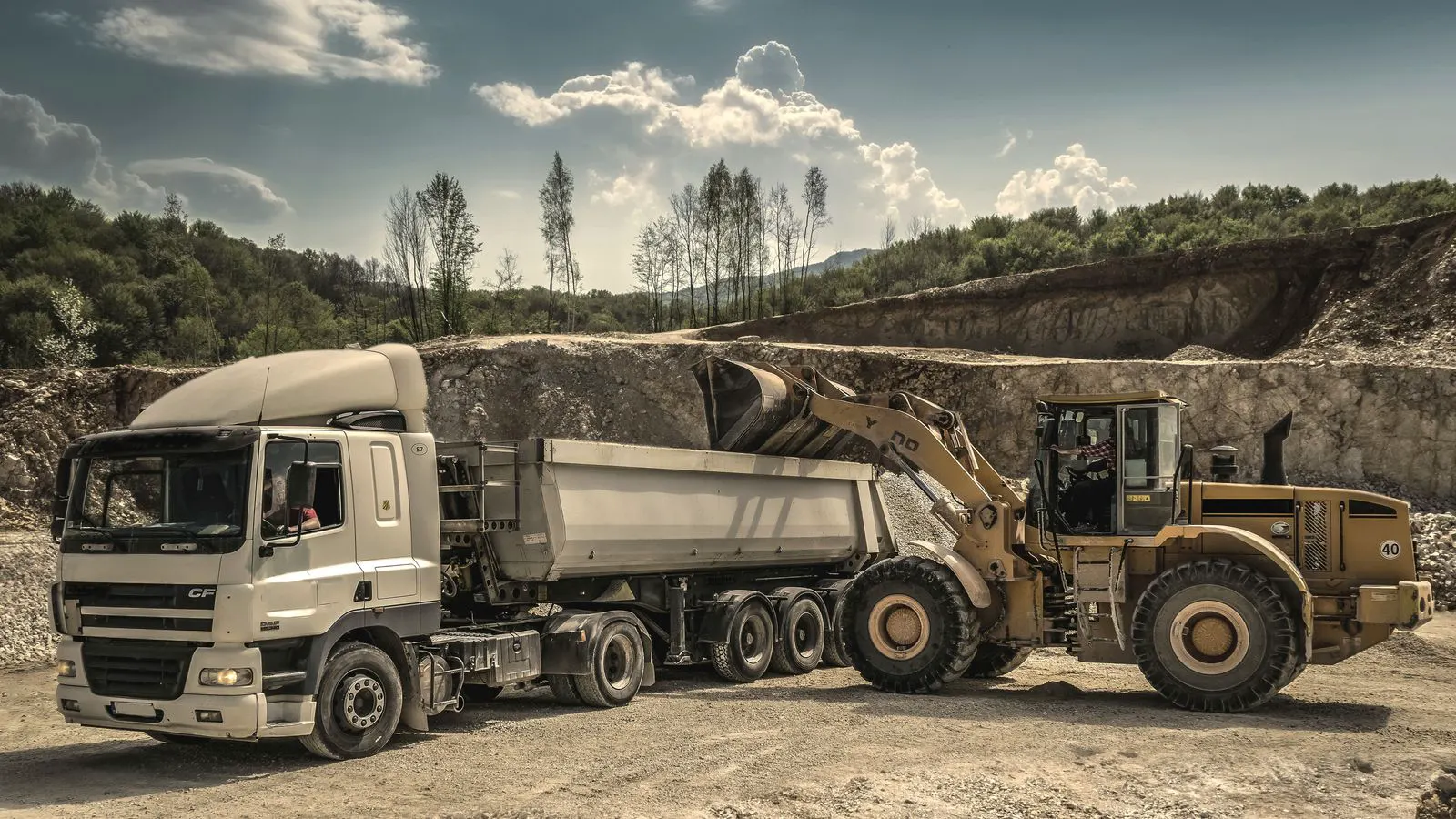
Truck loading systems are a critical part of the selection process. The bucket size and geometry of the loading shovel must match the truck bed dimensions. If the shovel bucket is too large, it may not empty completely, leading to spillage and reduced effective payload. If it is too small, the loading cycle takes longer, reducing the truck’s utilization.
The height of the shovel bucket above the truck bed is another factor. The bucket must clear the truck’s side rails without hitting the structure. This height is often determined by the shovel’s lift angle. The loading pattern, such as full bucket or partial bucket, affects the center of gravity and the stability of the truck during the trip.
Automated loading systems are becoming more common in high-volume operations. These systems use sensors to control the shovel bucket position, ensuring a consistent fill level. This improves payload accuracy and reduces the need for manual adjustment by the operator. The truck’s control system must be compatible with the loading system’s communication protocol.
Loading compatibility is a precise engineering task. A shovel bucket that is 1 meter too wide for the truck bed will cause material to spill over the sides during the dumping process. This not only wastes material but also creates a safety hazard for ground workers. Conversely, a bucket that is too narrow will require multiple passes to fill the truck bed, increasing the loading time from 15 seconds to 30 seconds. This doubling of loading time reduces the truck’s utilization from 90% to 75%, directly impacting productivity.
The height of the shovel bucket above the truck bed is a common source of conflict. If the shovel’s lift angle is insufficient, the bucket may hit the truck’s side rails, causing damage to the truck structure and the shovel’s boom. Engineers must calculate the required lift angle based on the truck’s bed height and the shovel’s geometry. A 10-degree increase in lift angle can be the difference between a clean load and a structural impact.
Automated loading systems use radar or LiDAR sensors to detect the truck’s position and the bucket’s fill level. These systems send data to the shovel’s control unit, which adjusts the bucket position in real-time. This ensures a consistent fill level, typically within 2% of the target. The truck’s control system must receive this data to confirm the load and adjust its own systems, such as the anti-roll bar or the suspension. Without proper communication protocol integration, the automated system may not function correctly, leading to manual adjustments that negate the benefits of automation.
Calculating Total Operating Costs
Fuel consumption is the largest operating cost for haul trucks. The selected model should be evaluated for its fuel burn rate under the expected operating conditions. Engine efficiency, aerodynamic drag, and tire rolling resistance all contribute to fuel use. A truck with a more efficient engine may have a higher purchase price but lower long-term costs.
Maintenance costs depend on the design of the truck and the availability of parts. Complex systems require more frequent inspections and specialized tools. The mean time between failures for critical components, such as the final drives and brake systems, should be considered. Fleet operators often look at the total cost of ownership over a five-year period, including fuel, maintenance, parts, and downtime.
The residual value of the truck also impacts the total cost. A model with a strong resale value can offset the initial investment. The availability of service contracts and technical support from the manufacturer is a key factor in minimizing downtime.
Fuel consumption is typically measured in liters per tonne-kilometer. A truck with a 40-liter per tonne-km burn rate will cost significantly more to operate than one with a 35-liter per tonne-km rate over a 10-year period. The difference may be small on a daily basis, but over thousands of cycles, it accumulates into millions of dollars. Engine efficiency is influenced by the engine’s displacement and the presence of a turbocharger. A larger engine with a turbocharger may be more efficient under load than a smaller engine without one.
Aerodynamic drag is a significant factor for long-haul trucks. The shape of the cab, the position of the mirrors, and the presence of a rear deflector all impact air resistance. A truck with a simplify design can reduce fuel consumption by 5-10% compared to a standard design. Tire rolling resistance is another key factor. Tires with a low rolling resistance coefficient, such as those with a silane-treated compound, can reduce fuel use by up to 3%. However, these tires may have a shorter lifespan, so the total cost of ownership must account for tire replacement frequency.
Maintenance costs are often underestimated. A truck with a complex hydraulic system requires regular fluid changes and seal replacements. A truck with a simpler design may have lower maintenance costs but lower efficiency. The mean time between failures (MTBF) for critical components is a key metric. A final drive with an MTBF of 5,000 hours will require replacement more frequently than one with an MTBF of 10,000 hours. The cost of downtime during replacement is often higher than the cost of the part itself.
The residual value of the truck is a significant factor in the total cost of ownership. A truck with a strong resale value can offset 10-20% of the initial investment over its operating life. The availability of service contracts and technical support from the manufacturer is a key factor in minimizing downtime. A truck with a local service center within 50 kilometers can be repaired within 24 hours, whereas a truck without local support may have downtime of 7 days or more.
Considering Operator Factors and Fleet Management
The ease of use for the operator affects safety and productivity. Trucks with advanced cab ergonomics, low seating position, and clear sightlines reduce operator fatigue. Modern trucks feature automated systems for shifting, braking, and stability control, which reduce the cognitive load on the operator.
Fleet management systems track the performance of each truck in real-time. These systems monitor fuel consumption, engine temperature, and maintenance schedules. The selected truck must integrate with the mine’s existing fleet management software. This integration allows for better planning and early detection of potential issues.
Operator training is a significant factor in fleet performance. The training program must cover the specific features of the selected truck, including the loading systems and the automated controls. A well-trained operator can achieve higher utilization and lower fuel consumption.
Operator fatigue is a major safety risk. A truck with a high seating position and poor sightlines forces the operator to lean forward or turn their head to see the road. This increases neck and back strain, leading to fatigue and reduced concentration. A truck with a low seating position and a clear line of sight reduces this strain. The cab should also have adjustable seats, steering columns, and mirrors to accommodate different body types.
Automated systems such as automatic transmission, cruise control, and stability control reduce the cognitive load on the operator. These systems handle routine tasks, allowing the operator to focus on the road and the loading process. However, these systems must be intuitive and easy to use. A complex control panel can confuse the operator, leading to errors and reduced productivity.
Fleet management systems use telematics to track the performance of each truck in real-time. These systems monitor fuel consumption, engine temperature, and maintenance schedules. The data is sent to a central server, where it can be analyzed to identify trends and predict maintenance needs. For example, a sudden increase in fuel consumption may indicate a problem with the tires or the engine. Early detection can prevent a major breakdown.
Operator training is a significant factor in fleet performance. The training program must cover the specific features of the selected truck, including the loading systems and the automated controls. A well-trained operator can achieve higher utilization and lower fuel consumption. The training should include hands-on practice in a simulated environment before the operator is allowed to drive the truck on site.
Key Criteria for Haul Truck Selection
The following table summarizes the main criteria for evaluating haul trucks for high-volume mining operations.
| Criterion | What to look for | Why it matters |
|---|---|---|
| Payload Capacity | Matches daily tonnage target and cycle time | Determines the number of trips and overall throughput |
| Terrain Rating | Power-to-weight ratio and suspension design | Ensures safe and efficient operation on steep or rough roads |
| Loading Compatibility | Bucket size and height match truck bed | Prevents spillage and optimizes loading speed |
| Fuel Efficiency | Engine type and aerodynamic design | Reduces the largest operating cost over the truck’s life |
| Maintenance Access | Service intervals and parts availability | Minimizes downtime and total operating costs |
| Operator Interface | Ergonomics and automated control features | Improves safety, reduces fatigue, and increases productivity |
Final Decision Checklist
Before signing off on the haul truck selection, complete the following checklist.
- Verify the payload capacity against the calculated daily tonnage and cycle time.
- Confirm the truck’s power-to-weight ratio is sufficient for the steepest haul road gradient.
- Check the loading system compatibility with the existing shovels and the planned loading height.
- Review the total operating cost model, including fuel, maintenance, and parts for five years.
- Ensure the truck integrates with the mine’s fleet management and telematics systems.
- Confirm the availability of trained operators and spare parts for the selected model.
- Review the manufacturer’s service support and warranty terms for the operating region.
Frequently asked questions
How do I determine the right payload for my mine?
Calculate the daily tonnage target and divide it by the expected number of productive trips per shift. The result gives the required payload per truck.
What is the impact of haul road gradient on truck selection?
Steep gradients require a higher power-to-weight ratio to maintain speed and prevent excessive engine strain. The truck must have enough horsepower to handle the specific road profile.
How does the loading system affect truck performance?
The bucket size and height of the loading shovel must match the truck bed dimensions. A mismatch can lead to spillage, reduced payload, or longer loading cycles.
What should I consider regarding fuel costs?
Evaluate the engine efficiency and the truck's aerodynamic design. These factors determine the fuel burn rate, which is the largest operating cost for haul trucks.
Is it worth buying the largest truck available?
Not always. A larger truck may be more efficient for short haul distances but can be less efficient for long distances. The optimal size depends on the specific haul profile and production targets.