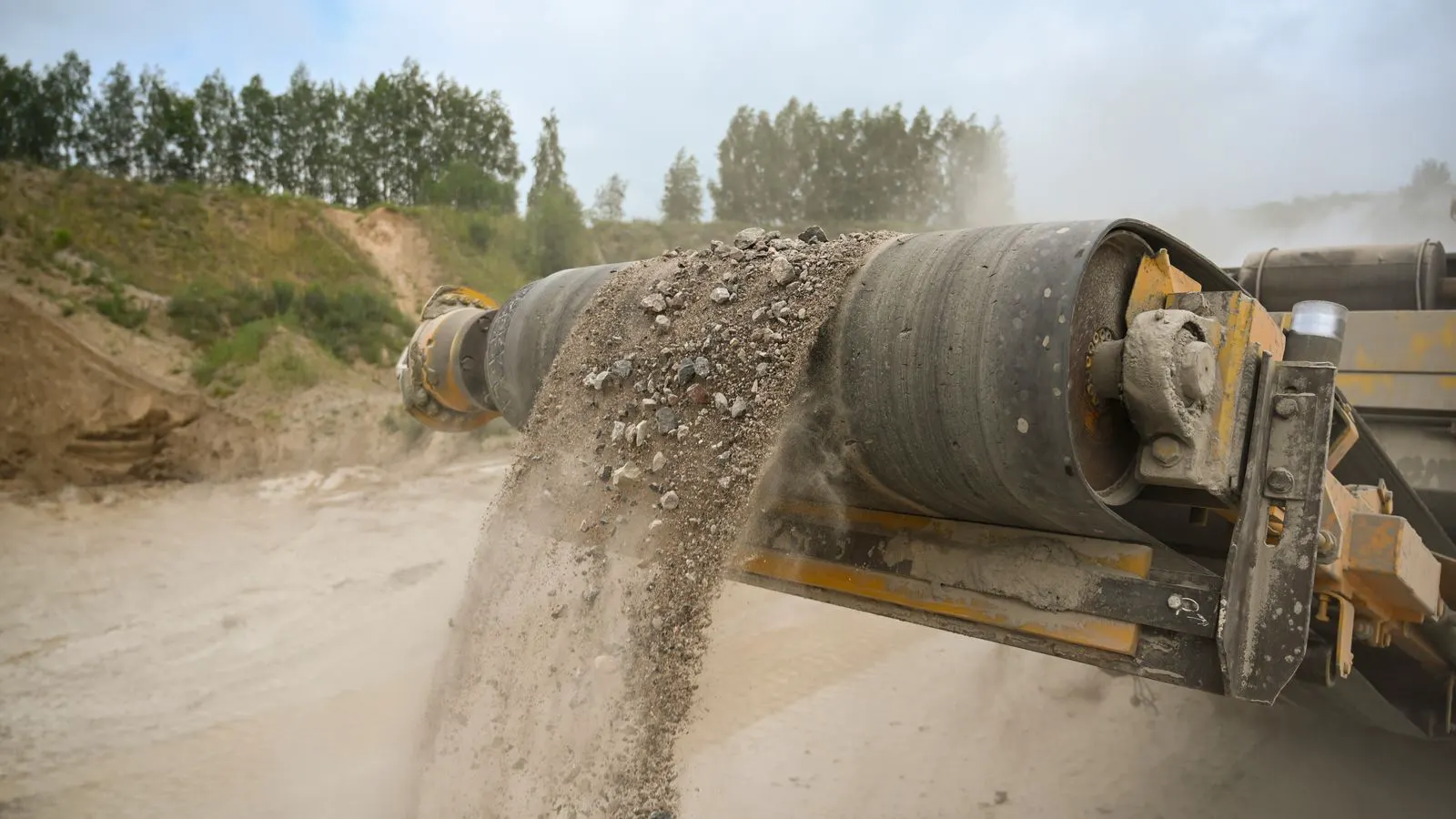
Belt tracking problems stem from misaligned idlers, worn parts, or poor belt conveyor design. Identify symptoms early and apply targeted fixes to stop off-tracking, reduce belt wear, and avoid unplanned downtime during maintenance.
- Off-tracking usually indicates misaligned idlers, a damaged head pulley, or a belt that is not centered.
- Quick fixes include adjusting idler positions, checking for foreign material buildup, and verifying tension.
- Proper belt conveyor design and regular conveyor maintenance prevent most tracking failures before they occur.
- Document every adjustment to build a reliable maintenance log for the equipment.
- Stop the line and inspect before forcing a belt back to center to avoid tearing or derailment.
A belt running off center is a visible warning that something in the system is wrong. In a mining operation, a drifting belt can tear against the side frame, damage the return idlers, or spill material at the tail pulley. The result is often a stoppage that costs more than the small alignment work that should have been done.
Why does the belt drift to one side?
Belt tracking is a balance between tension, pulley contact, and support geometry. When the belt moves toward the side of the head pulley, the material is usually being thrown there by a misaligned idler or a damaged pulley surface.
A common cause is a snub idler that is tilted the wrong way. The snub idler should push the belt toward the center, not pull it off. If that idler is installed at the wrong angle, every pass over the head pulley pushes the belt further off. Imagine a row of posts along a road. If the posts lean toward the center of the road, a car passing them will be nudged back to the middle. If they lean the wrong way, the car is pushed toward the shoulder. Snub idlers near the head pulley work on the same principle. They must be angled so that their outer edge is higher or closer to the centerline than their inner edge. If the installation team sets them level, they provide no correction force. The belt continues to drift.
Another cause is a dirty or damaged pulley. Coal dust, ore fines, or ice can build up on the lagging. This creates an uneven friction surface. The belt sticks to one side, loses contact with the other, and drifts away from the high-friction area. Lagging is the rubber or rubberized coating on the pulley surface that grips the belt. When it wears unevenly, the friction changes. One side of the pulley may have a rough, high-grip surface, while the other is polished smooth. The belt will naturally migrate toward the side with higher friction because it is being pulled more strongly on that side. This can happen slowly over weeks of operation, or quickly if a piece of lagging breaks away and leaves a groove in the steel.
Tension plays a major role as well. A belt that is too loose has less contact force against the idlers and pulleys. It slips and wanders. A belt that is too tight increases the load on the frame and bearings. In both cases, the belt does not sit flat and centered. The interaction between tension and support geometry is why a single adjustment rarely solves the problem. You must address the tension, the alignment, and the surface contact simultaneously.
What are the most common symptoms of off-tracking?
Watch the belt at three points: the tail pulley, the middle of the run, and the head pulley. A belt that is centered at the tail but off at the head usually has a misaligned head pulley. A belt that is off at the tail and gets worse toward the head usually has a misaligned return idler.
The most visible signs include:
- Material spilling from one side of the belt.
- Visible wear on one edge of the belt, often with a frayed or cut lip.
- A belt that touches the side frame or guard structure.
- Excessive noise from the belt rubbing against a frame member.
- A belt that drifts consistently in the same direction after a shutdown.
Material spillage is often the first sign operators notice. It may appear as a small pile of fines on the walkway or the side of the belt. If ignored, the pile grows. It falls to the ground or accumulates in the idler troughs. This creates a new imbalance. The extra weight on one side changes the belt shape and can force the belt further off center.
Visible wear on the belt edge is a clear indicator of mechanical damage. If the belt is drifting toward the side frame, the edge rubs against the structure. Over time, the rubber wears away. The belt edge may fray, with the fabric threads exposed. If the belt edge is damaged, it can catch on idlers or pulleys. This can lead to a sudden tear. The tear may start small, but under load, it propagates quickly. The belt may fail at the next high-stress point, such as around a pulley or at an idler.
Excessive noise is another warning sign. A belt rubbing against a frame member creates a scraping or grinding sound. This noise is usually audible from the control room or the walkway. If the belt is drifting slowly, the noise may be intermittent. If the belt is forced against the structure, the noise is constant. The sound is a direct indication that the belt is not in its designed position.
If the belt drifts slowly, it is often a tension or alignment issue. If it jumps off suddenly, suspect a damaged idler, a broken pulley lagging, or a foreign object lodged in the belt. A sudden jump suggests a loss of support. An idler may have broken, or a pulley lagging piece may have shifted. The belt loses its guide and is thrown off by the momentum of the material.
How to fix off-tracking quickly
Do not force the belt back to center with a hand or a stick. That can tear the belt edge or damage the idler. Stop the line, clear the area, and make controlled adjustments.
Start at the tail. The belt should enter the tail pulley parallel to the pulley width. If it is not parallel, adjust the tail pulley bolts or the tail frame. Move the tail pulley so the belt approaches the pulley at the correct angle. The tail pulley is often the first place to make adjustments. It is usually easier to access and adjust than the head pulley. If the tail pulley is shifted to one side, the belt will approach it at an angle. When the belt wraps around the tail pulley, that angle is transferred to the run. The belt then leaves the tail pulley at an angle, which causes it to drift.
Next, check the idlers. On a standard run, the idlers should be square to the belt path. If one idler is tilted, the belt will be pushed to the opposite side. Adjust the idler carrier so the idler is level. If the idler is worn or stuck, replace it. Idlers are the supports that hold the belt up. They come in different types. Rollers are used under the belt to support its weight. Snub idlers are angled to guide the belt. Return idlers support the empty side of the belt. Each type has a specific function. If an idler is out of alignment, it pushes the belt in the wrong direction. If an idler is stuck, it acts as a fixed point. The belt cannot move over it smoothly, and it is forced to the opposite side.
Check the head pulley. The belt must wrap the head pulley evenly. If the head pulley is misaligned, the belt will be thrown to one side. Adjust the head pulley bearings or the head frame. A small adjustment here can correct a large drift. The head pulley is the driving pulley. It pulls the belt around the system. If it is not aligned with the belt path, the belt is pulled off center as it leaves the pulley. This is why the head pulley alignment is critical. A slight misalignment here can cause significant drift over the length of the conveyor.
Finally, verify tension. A belt that is too loose will slip and wander. A belt that is too tight can damage the bearings and frame. Check the tension per the equipment specifications. Adjust the tail tensioner or the tail pulley position as needed. Tension is often overlooked during tracking adjustments. Operators may align the idlers and pulleys but leave the tension unchanged. If the tension is incorrect, the belt will not sit flat. It will sag or lift, which changes its contact with the idlers. The tracking will be unstable. Always check the tension after making alignment adjustments. The belt may settle into a different position once the alignment is corrected, which may require a fine adjustment of the tension.
What is the role of belt conveyor design in tracking?
Good belt conveyor design makes tracking easier to manage. A well-designed line uses idlers that are installed at the correct angles and spaced to support the belt without creating a pinch point. The head pulley is sized to provide adequate wrap angle, and the tail pulley is positioned to allow for tension adjustment.
In a mining environment, the design must also account for the material. Heavy, abrasive loads create more stress on the belt and idlers. A design that works for light material may fail under heavy load. The belt width, idler spacing, and pulley lagging type all matter. A conveyor designed for a smooth, non-abrasive material may have idlers spaced further apart than one designed for a rough, heavy load. The closer the idlers, the better the support, but the more friction there is. The design must balance support and friction. If the idlers are too close, the belt experiences more drag. If they are too far apart, the belt sags and may not track properly.
A common design mistake is placing all the idlers at the same angle. The snub idlers near the head pulley must be angled to guide the belt. If they are installed level, they will not correct the drift. The design drawing should show the correct angle for each idler type. In some cases, the design may specify a different angle for idlers on the return side. The return side of the belt is empty, so it has less friction. It may need different support to keep it centered. A design that ignores the return side may lead to tracking problems that are difficult to fix in the field.
The frame design also matters. The frame must be straight and rigid. If the frame is bent or out of alignment, the idlers and pulleys will be misaligned. A design that does not account for thermal expansion or vibration may lead to frame distortion over time. In mining, the conveyor may operate in extreme temperatures or high vibration environments. The design must include provisions for these conditions. If the frame is not designed to handle these stresses, it will warp, and the tracking will be compromised.
How does conveyor maintenance prevent tracking problems?
Regular conveyor maintenance catches small issues before they become failures. During routine inspections, check the idlers for rotation, tilt, and wear. Look for foreign material buildup on the pulleys. Inspect the belt edge for cuts or fraying.
A simple checklist helps. Look at the belt at the tail, the middle, and the head. Check the idlers for tilt. Check the pulleys for lagging damage. Check the tension. Record the findings in the maintenance log.
Maintenance is not just about fixing problems. It is about monitoring the system. A belt that is tracking well today may start to drift tomorrow if an idler becomes worn or a pulley accumulates dust. Regular checks allow technicians to identify these changes early. The maintenance log is a record of the system’s health. It shows the history of adjustments and issues. If a belt drifts to the right repeatedly, the log may show that the right side idlers are wearing faster. This pattern suggests a design or alignment issue that needs attention.
If the belt is tracking well, note the adjustment settings. If you made an adjustment, note what you changed and why. This log helps the next technician understand the history of the line. It also helps identify a recurring issue that needs a design review. A good maintenance program includes documentation. Without a log, each technician starts from scratch. They may make the same adjustments repeatedly without understanding the underlying cause. The log provides continuity and context.
When to call for a design review
If the belt tracks poorly after multiple adjustments, the problem is likely in the design. A repeated drift in the same direction suggests a structural issue. The frame may be out of alignment. The idler supports may be bent. The pulley alignment may be off.
A design review looks at the entire line. It checks the frame straightness, the idler spacing, the pulley alignment, and the belt tension. It may recommend new idlers, a new pulley, or a frame repair. It may also recommend a different belt width or a different idler spacing to reduce stress.
Do not ignore a recurring tracking problem. A small alignment issue can become a major failure. The cost of a design review is low. The cost of a torn belt and a long shutdown is high. A design review involves a team of engineers and technicians who analyze the system. They may use laser alignment tools to measure the frame and pulleys. They may inspect the idler supports for stress marks or bending. They may review the original design drawings and compare them to the current condition. The goal is to find the root cause of the tracking issue. It may be a simple fix, such as replacing a bent idler support. Or it may be a major change, such as modifying the frame or changing the belt width. The key is to address the cause, not just the symptom.
| Symptom | Likely cause | What to do |
|---|---|---|
| Belt drifts to one side at head pulley | Misaligned head pulley or snub idler | Adjust head pulley alignment. Check snub idler angle. |
| Belt touches side frame | Excessive tension or bent frame | Reduce tension. Check frame straightness. |
| Belt edge wear on one side | Off-tracking or damaged pulley | Correct tracking. Inspect and replace pulley lagging. |
| Belt jumps off suddenly | Foreign object or broken idler | Stop line. Remove object. Replace broken idler. |
| Belt drifts after shutdown | Misaligned tail pulley or low tension | Adjust tail pulley alignment. Check and adjust tension. |
A belt that is tracking well is a small sign of a well-run operation. It takes time to get there. It takes attention to keep it there. The fixes are not complicated, but they require a clear eye and a methodical approach. Start at the tail, work toward the head, and document every step.
Frequently asked questions
How often should I check belt tracking?
Check tracking during every startup and at regular intervals during operation. A quick visual check takes seconds and catches drift before it becomes a problem.
Can a worn belt cause off-tracking?
Yes. A worn belt may not sit evenly on the idlers or pulleys. This can create an uneven contact surface that pushes the belt to one side. Replace the belt when it is near the end of its service life.
What if the belt drifts to the opposite side after I adjust it?
This usually means the initial adjustment was too large or the wrong part was adjusted. Make smaller adjustments and recheck the tracking. If the drift persists, inspect the idlers and pulleys for damage.
Is it safe to walk under a running conveyor to check the belt?
No. Never walk under or near a running belt. Stop the line and lock it out before inspecting or adjusting any part.
How much tension should the belt have?
The tension depends on the belt size, the line length, and the load. Follow the equipment specifications. A general rule is that the belt should be tight enough to prevent slippage but loose enough to protect the bearings and frame.