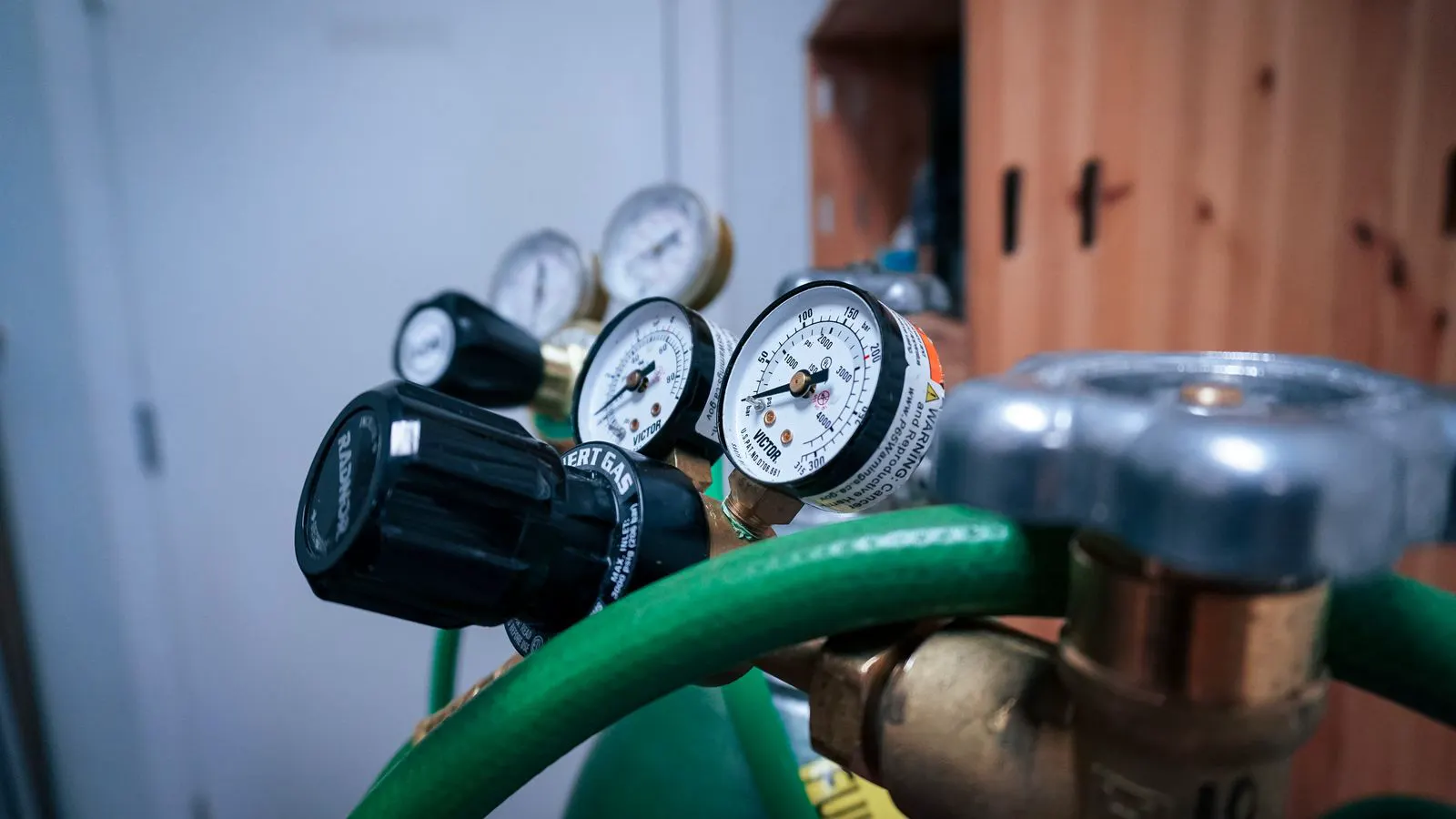
Air pressure loss in a drilling rig usually traces back to leaks, undersized compressors, or clogged filters. This guide lists common symptoms, likely causes, and practical fixes to restore stable pressure. It also covers prevention methods to reduce downtime and protect equipment.
- Check hoses and fittings first. Small leaks at joints are the most common cause of pressure drops.
- Verify that the air compressor capacity matches the drilling rig demand.
- Clean or replace filters and drain traps regularly to prevent moisture and debris from causing blockages.
- Use pressure gauges at multiple points to isolate where the loss is occurring.
- Maintain a regular inspection schedule to catch issues before they cause full system failure.
Why is the pressure dropping?
A drop in air pressure is one of the first signs of trouble in a drilling setup. When the pressure gauge starts to fall, the bit may stop cutting, the air feed to the drill string may weaken, and the rig can overwork to compensate. This puts extra stress on the compressor, the drill string, and the operator.
The problem is rarely a single fault. It usually comes from a combination of factors. A small leak in a hose, a partially closed valve, a clogged filter, or a compressor that is simply too small for the job can all combine to create a slow pressure drop.
The goal of this guide is to help you find the source quickly. You do not need to replace the entire system. In most cases, the fix is a specific part or a specific adjustment. Understanding how the system works helps you identify which part of the chain is failing. Air drilling relies on a continuous supply of compressed air to lubricate the bit, flush the bore, and drive the rotary mechanism. If the supply chain weakens, the drill string stops rotating effectively. The bit stops clearing rock. The operator sees reduced production. The gauge tells you the system is not holding pressure.
What are the common symptoms of air pressure loss?
Before you start fixing anything, you need to know what you are looking at. Pressure loss can show up in several ways. Some are obvious. Others are subtle.
The most common symptoms include:
- The pressure gauge reading falls over time while the compressor is running.
- The gauge reading drops when the drilling rig turns on, then recovers slowly.
- The air stream to the bit is weak or inconsistent.
- The compressor runs longer than usual to maintain pressure.
- The pressure recovers after a stop, but the gauge shows a lower maximum than before.
If you see any of these, the system is losing pressure somewhere. The next step is to find where.
Pay attention to the sound of the system. A healthy air system makes a steady, low hum from the compressor and a consistent hiss from the bit. When pressure is lost, that hiss becomes erratic. You might hear a sharp, thin whistle from a fitting. That whistle is the sound of air escaping through a small gap. A small leak at a quick coupling can be silent until you get close. It becomes a high-pitched squeal when the air speed increases.
Watch the gauge behavior carefully. If the needle drops slowly over minutes, you are looking for a leak. If the needle drops instantly when the rig engages, you are looking for a demand issue or a blockage. If the needle bounces up and down, the compressor is cycling too frequently. This cycling can be caused by a small tank, a leaking relief valve, or an undersized motor.
What is the likely cause and the fix?
The table below lists the most common causes of air pressure loss in drilling rigs. It also explains what to do about each one.
| Symptom | Likely cause | What to do |
|---|---|---|
| Pressure drops while drilling | Leak in air hose or fitting | Inspect all hoses, quick couplings, and joints. Look for hissing sounds or oil mist. Replace damaged sections. |
| Pressure falls when compressor kicks on | Compressor is undersized or air tank is too small | Check the compressor duty cycle and tank size against the rig demand. Consider a larger compressor or a second unit. |
| Weak air flow to bit | Clogged filter or restricted valve | Remove and clean the intake filter. Check the regulator valve for partial closure or debris. Replace the filter if it is dirty beyond cleaning. |
| Pressure recovers after stop | Pressure relief valve is sticking or failing | Test the relief valve by slowly opening it. If it does not release pressure smoothly, replace the valve. |
| Gauge reading is low but stable | Faulty pressure gauge | Compare the gauge reading with a second, known-good gauge. Replace the gauge if it is inaccurate. |
| Pressure drops under heavy load | Drill string is restricted or bit is damaged | Inspect the drill string for bends, kinks, or internal blockage. Check the bit for wear or debris in the air ports. |
This table covers most of the issues you will encounter on site. If the problem is not on this list, the cause is likely more complex and may require a specialist.
When you use this table, match the symptom to the cause carefully. Do not jump to the first item. A pressure drop while drilling could be a hose leak, but it could also be a drill string that is partially blocked. If the string is blocked, the air cannot reach the bit. The pressure builds up behind the blockage and then leaks out at the source. You need to check the string first. If the string is clear, check the hoses.
How to isolate the leak
Once you have identified a leak, you need to find it. You do not need to guess. Use a systematic approach.
Start at the compressor. Check the discharge hose. Look for oil residue or dust around the connection. A small leak at a quick coupling can lose a significant amount of air. Oil residue is a strong indicator. Compressed air often carries small amounts of oil from the compressor. If there is a leak, the oil will be expelled along with the air. You will see a dark spot on the fitting or the surrounding area.
Next, check the hoses leading to the drilling rig. Inspect each joint. Look for cracks in the hose material. If the hose is old, the rubber may have hardened and developed small splits. These splits are hard to see but easy to hear if you listen with the compressor running. Tap the hose gently with a wrench handle. A solid, healthy hose has a dull thud. A hose with a crack or a loose internal fitting has a hollow sound.
Then check the valves. A pressure regulator that is not fully open can restrict flow. A check valve that is sticking can prevent proper pressure transfer. Turn each valve and listen for changes in the sound of the air. If the sound changes when you turn a valve, that valve is involved in the problem.
If you cannot find the leak by looking or listening, use soapy water. Apply a thin layer of soapy water to each joint. If bubbles form, you have found the leak. This method is simple and effective. You need a spray bottle with a mixture of water and dish soap. The bubbles will stick to the leak point. They will not form on a dry, sealed surface.
What if the compressor is the problem?
Sometimes the leak is not in the hoses. The compressor itself may be the source of the pressure loss.
Check the air tank. If the tank is too small, it will not hold enough air to meet the demand of the drilling rig. The compressor will cycle on and off frequently, and the pressure will never stay stable. A large tank acts as a buffer. It holds enough air to keep the pressure stable while the compressor cycles. If the tank is too small, the compressor has to work constantly. This leads to overheating and short motor life.
Check the compressor motor. If the motor is weak or overheating, it may not be able to maintain the required pressure. Listen for unusual noises. Check the motor temperature. If the motor is hot to the touch, the compressor is working too hard. You should be able to place your hand on the motor housing for a few seconds without pain. If you cannot, the motor is overheating.
Check the discharge pressure setting. If the setting is too low, the compressor will not build enough pressure. Adjust the setting to match the requirements of the drilling rig. The setting should be higher than the pressure required by the bit. If the setting is too high, the compressor works harder and the relief valve may open. You need to find the correct balance.
If the compressor is undersized, the only real fix is to replace it with a larger unit or to add a second compressor in series or parallel. This is a bigger investment, but it may be necessary for the job.
How to prevent air pressure loss
Fixing the problem is one thing. Preventing it is better. A few simple habits can keep your system running smoothly.
- Inspect hoses and fittings every shift. Look for cracks, wear, and loose connections. Replace anything that looks damaged.
- Clean the intake filter every week. A dirty filter restricts airflow and causes the compressor to work harder.
- Drain the air tank daily. Moisture builds up in the tank and can corrode internal parts and clog valves.
- Check the pressure gauges monthly. Calibrate them against a known standard. Replace gauges that are out of tolerance.
- Keep a maintenance log. Record every repair, replacement, and adjustment. This helps you spot patterns and plan maintenance before a failure occurs.
These steps take time, but they save much more time and money in the long run.
What tools do you need for this job?
You do not need a large workshop to fix air pressure loss. A basic toolkit is enough for most tasks.
You will need a set of wrenches and socket wrenches for fittings and valves. You will need a pressure gauge that is calibrated and accurate. A second gauge is helpful for comparison.
You will need soapy water in a spray bottle to find leaks. You will need a small brush to clean filters. You will need replacement hoses, fittings, filters, and valves. Keep a small stock of these parts on site.
If you have a second pressure gauge, you can isolate the problem faster. If the first gauge reads low but the second gauge reads normal, the first gauge is faulty. If both read low, the system is losing pressure.
Frequently asked questions
Why does the pressure drop only when drilling?
The drilling rig uses more air when cutting. If the compressor cannot keep up, the pressure drops. This usually means the compressor is undersized or there is a leak that only appears under load.
Can I fix a pressure leak with tape?
No. Tape is not a permanent fix for air leaks. It may hold for a short time, but it will fail under pressure and temperature changes. Replace the hose, fitting, or seal properly.
How often should I check the air tank?
Drain the air tank every day. Check the tank for corrosion and damage weekly. Inspect the safety valve monthly.
What is the best way to test a pressure gauge?
Compare the reading with a known-good gauge of the same size and type. If the readings differ by more than a few percent, replace the gauge.
Can a clogged filter cause pressure loss?
Yes. A clogged intake filter restricts airflow into the compressor. The compressor cannot build pressure as quickly, and the gauge reading will drop. Clean or replace the filter.